Hospital CEO or CTO
PDF & Podcast Briefings
Executive and technical briefings on 50 state regulatory compliance, MCP AI, Stryker-like MDM attacks and post-quantum cryptography, HIPAA compliance, and protecting hospital data.
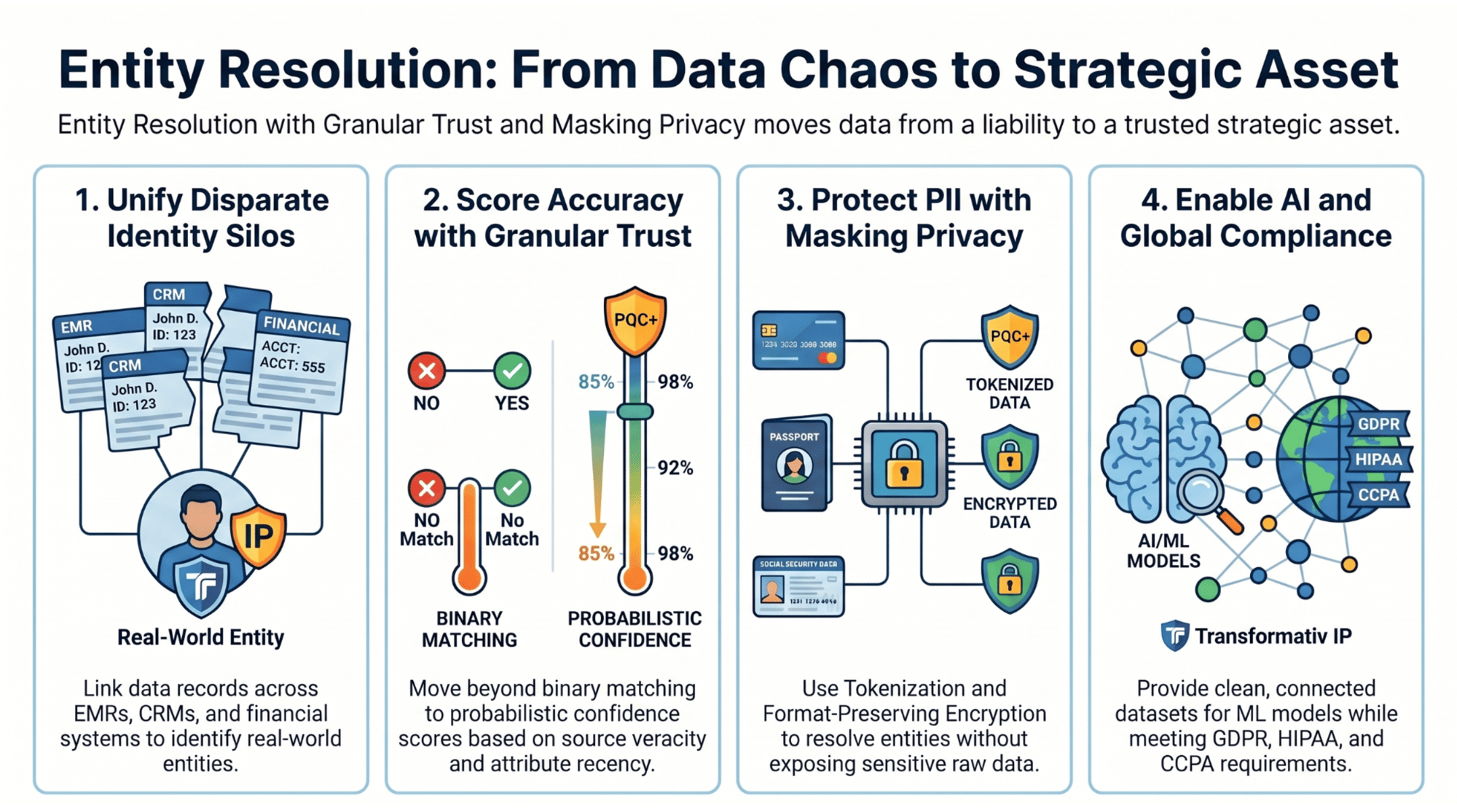
CMS Reference Guide for Interoperability PQC+™
PDF · CMS Interoperability & PQC+™ Reference
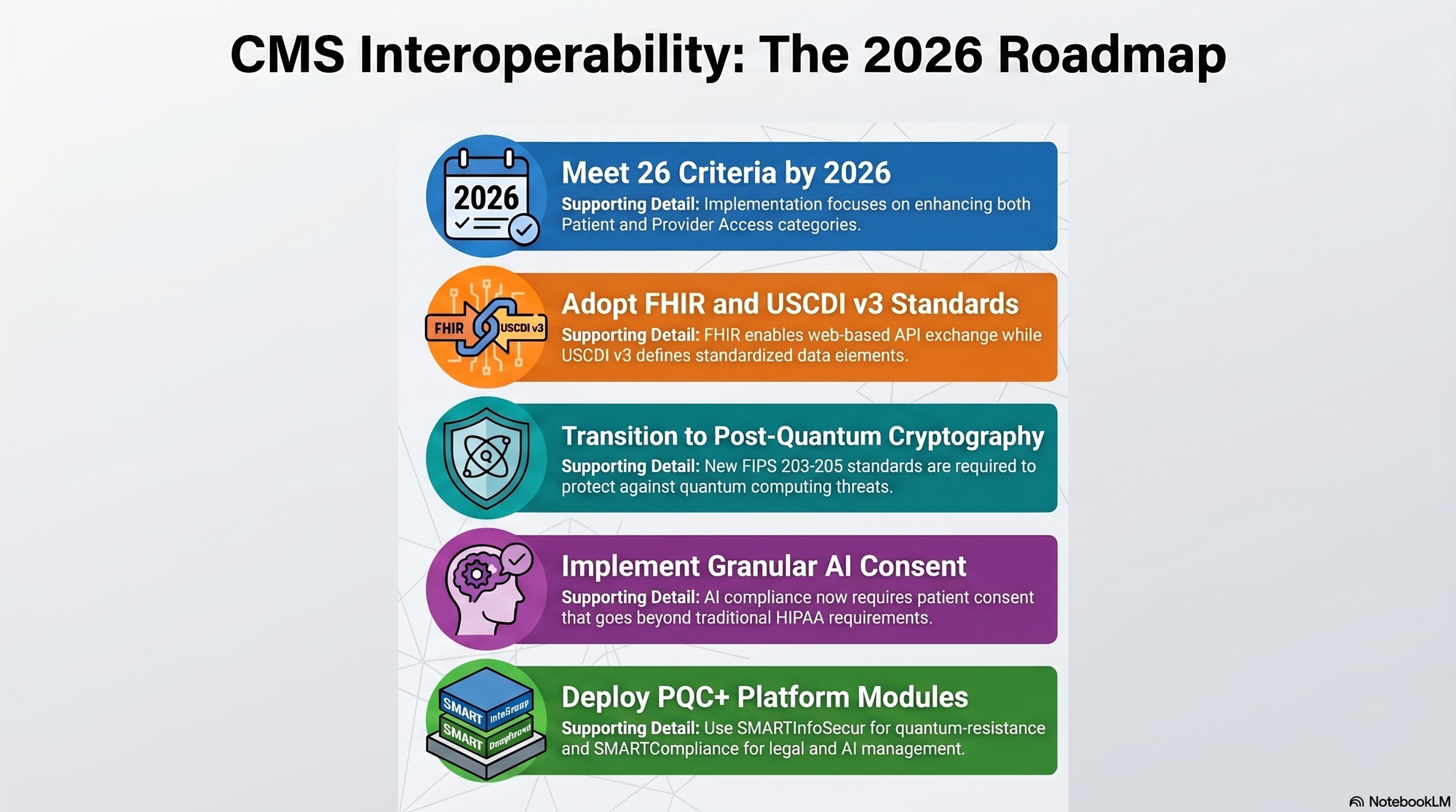
The Changed Regulatory & Quantum‑Risk Environment
Our, Q-InfoSecur™, provides quantum-resistant security using CNSA-compliant algorithms executed within a FIPS 140-3 Validated cryptographic module.
Six pillars of dispute-proof evidence from U.S. government primary sources — the authorities procurement officers and boards recognize instantly. Click any card to expand its verified sources and supporting evidence.
State Privacy Laws & Enforcement
DOJ Data Security Program
Post-Quantum Migration & HNDL
Executive & CISO Personal Liability
PBM Scrutiny — Federal & State
State AI Laws Proliferating
Why These Sources Are Dispute-Proof
U.S. government primary sources (DOJ, CISA, NSA, NIST, Federal Register) are authoritative, easily verifiable by procurement officers, and — as U.S. federal government works — cannot be dismissed as vendor marketing. These are the strongest possible foundation for any regulatory or security claim. View the full Evidence Wall →
Quantum-Proofing Healthcare with Embedded Policy
29-minute CISO & CTO briefing · MP3

Quantum-Proofing the CMS Interoperability Framework
14-minute CEO & CFO briefing · MP3
Quantum-Proofing the CMS Interoperability Mandate
34-minute CISO & CTO briefing · MP3
The Fatal HIPAA Blind Spot — and Why Only PQC+™ Closes It
HIPAA was written for ePHI. It does not regulate the HVAC system that keeps your operating-room pressure differential safe. It does not regulate the medical gas distribution that keeps ventilated patients alive. It does not regulate the elevator priority systems that move stroke patients to the ED. Patients die when those systems fail. Auditors and plaintiffs' counsel now know this. Our PQC Monitoring component is the only platform on this list that closes that gap — across HVAC, medical gas, electrical power, pneumatic tube systems, elevators, fire and life safety, water management, and physical access control.
Building automation systems fall outside HIPAA scope, yet patient lives depend on them continuously. PQC Monitoring uniquely illuminates and secures this life-sustaining blind spot.
Post-Quantum Cryptography Without Regulatory Mapping Is a Liability, Not a Defense.
While approximately twelve PQC vendors currently offer credible solutions, we are uniquely positioned as the only provider to integrate our product with the audit and complex 50-state and federal regulatory compliance requirements. We are also 100% software and full installation of our PQC+ solution is within 90 days; whereas most competitors take years with expensive rip-and-replace requirements. Visit the PQC+ pages of our website.
Competitors typically provide data encryption and certification before concluding their engagement. However, a year from now, should another state's attorney general subpoena your audit trail regarding behavioral health data shared across state lines, encryption alone will prove insufficient. Without the necessary consent-management audit trail, which our competitors fail to provide, legal proceedings will continue regardless of your encryption status. If you visit our Regulatory Compliance page or DOJ DSP page, you will fully appreciate why we should be your top vendor.
| Capability | Typical PQC Vendor | TransformativIP PQC+™ |
|---|---|---|
| NIST FIPS 203/204/205 algorithms | ✓ | Vendor |
| FIPS 140-3 module validation | Sometimes | CVMP #4482 |
| Existing FDA Authorization to Operate | ✗ | Basis for state ATO reciprocity |
| Time to full deployment | 18 months – 3+ years | 60–90 days |
| CMS NIST 800-53 control mapping (60+ controls) | ✗ | ✓ |
| HIPAA Security Rule full coverage | Partial (technical safeguards only) | Incl. OT blind spot |
| 42 CFR Part 2 + 8 sensitive data categories | ✗ | Cryptographically enforced |
| 21st Century Cures Act / TEFCA / QHIN | ✗ | ✓ |
| FDA Section 524B medical device security | ✗ | ✓ |
| AI governance (5 consent use cases + MCP server) | ✗ | ✓ |
| OT/building automation (HVAC, medical gas, power, fire/life safety) | ✗ | 340+ protocol parsers |
| 9 proxy authority types (POA, guardianship, etc.) | ✗ | ✓ |
| 50-state regulatory variation engine | ✗ | SMARTCompliance |
| Reciprocity package for state ATO | ✗ | Cuts ATO from 6–12 months to 6–8 weeks |
Three Forces Just Collided. Most State Leadership Teams Have Connected None of Them.
We have briefed CTOs, CISOs, and CEOs across multiple awarded states. Most can name one of the three forces below. A handful can name two. We have not yet found a state leadership team that has connected all three — and the intersection of all three is exactly where RHTP audit findings, funding clawbacks, and personal criminal liability now live.
The Quantum Clock Is Real, and It's Federal
Google, IBM, and Microsoft — the companies actually building the machines — have converged on a 2029 "Q-Day" timeline. Google's Willow chip solved the underlying physics in December 2024; the remainder is engineering scale. NIST has already mandated post-quantum migration. CMS has the same expectation embedded in its 2025–2026 cryptographic controls update. Patient data flowing over your rural broadband today is being harvested today by adversaries who will decrypt it the moment the math breaks.
Rural Networks Are the Softest Target in the System
Patient data in rural networks moves over public internet, satellite links, and consumer-grade cellular — all of it interceptable. A single Critical Access Hospital may serve patients across multiple counties with no centralized security perimeter. CMS mandates apply to those facilities at exactly the same standard as Mayo Clinic. The funding gap between them is not relevant to the auditor.
The Liability Is Now Personal, and Jurisdiction Follows the Patient
Under the DOJ Data Security Program effective January 2026, when a leader was aware of a known threat and failed to act, the legal designation shifts from negligence to "willful violation." Worse for state RHTP officials: jurisdiction is determined by where the patient lives, not where you sit. A rural patient treated across state lines pulls you into that patient's state criminal code — even if you've never set foot there.
“Wait and see” is no longer an analytical posture. For a state RHTP official, it is a documented decision that prosecutors and plaintiffs' attorneys will read into a transcript on day one of an audit.